
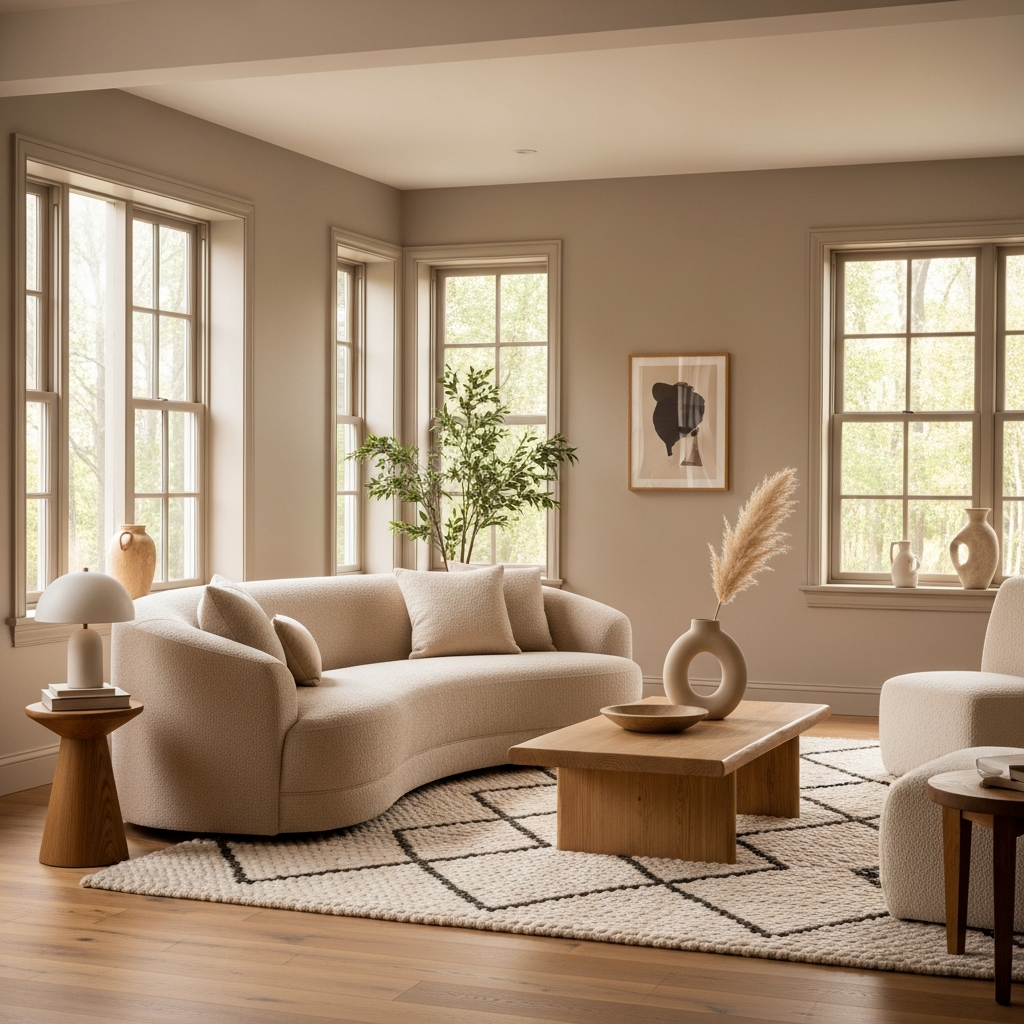


Direct Answer: The defining 2026 interior design trends represent a profound psychological and aesthetic shift away from the stark, clinical minimalism and cool grays of the previous decade. Today, the industry is overwhelmingly favoring “Warm Minimalism” and “Modern Heritage”—movements characterized by red-based taupes, rich jewel-tone color drenching, curved silhouettes, and a resurgence of dark, natural woods. Furthermore, an increasing desire to escape digital fatigue has sparked the revival of the analog “useless room” and highly integrated, multisensory biophilic designs. Rather than chasing fleeting internet fads, the 2026 aesthetic focuses on creating deeply personal, layered, and sensory-rich sanctuaries that seamlessly blend historical craftsmanship with contemporary comfort.


- Introduction: The Emotional Recalibration of Interior Architecture
- 1. Warm Minimalism: The New Sensory Language of Luxury
- 2. Modern Heritage: Bridging the Past and Present
- 3. The 2026 Chromatic Landscape: Expression and Drenching
- 4. Spatial Reconfiguration: The Return of the “Useless Room”
- 5. Multisensory Biophilic Integration
- 6. Architectural Details, Millwork, and Textiles
- 7. Sustainable and Conscious Consumerism
- Conclusion: The Future of Lived-In Spaces
Introduction: The Emotional Recalibration of Interior Architecture
The trajectory of residential and commercial architecture is defined not merely by visual evolution, but by a fundamental psychological shift in how individuals interact with their built environments. After years of design extremes—ranging from the sterile, ultra-sleek minimalism of the early 2010s to the chaotic, hyper-saturated maximalism of the post-pandemic era—the current landscape represents a deliberate, necessary correction. Homeowners, renters, and designers alike are actively moving away from “show-home perfection” toward spaces that prioritize visual decompression, tactile engagement, and emotional grounding.
This movement is a direct, measurable response to a broader cultural backdrop of digital fatigue, algorithm-led sameness, and cognitive overload. In a society where the boundaries between professional labor and personal living have become permanently blurred, residential interiors are being tasked with a heavier psychological burden. A home must do more than provide shelter; it must actively support emotional well-being and mental restoration. Consequently, the cold, impersonal spaces of the past are being replaced by interiors that feel storied, thoughtfully layered, and deeply intentional.
The defining styles of the year—namely Warm Minimalism, Modern Heritage, and Multisensory Biophilia—are unified by a common thread: the profound desire for authenticity. Whether that authenticity is expressed through the natural, evolving patina of unlacquered brass, the immersive depth of a color-drenched dining room, or the quiet, unplugged luxury of an analog reading nook, 2026 interior design trends are ultimately focused on designing for the human experience.
1. Warm Minimalism: The New Sensory Language of Luxury
Traditional minimalism, historically characterized by stark white walls, sharp angles, and an almost clinical absence of decor, has officially fallen out of favor. In its place, “Warm Minimalism” has emerged as the dominant force dictating new home builds and renovations in 2026. Warm minimalism successfully retains the function-first benefits of its predecessor—simplicity, clean lines, and an organized, clutter-free environment—but deliberately softens the harsh edges with rich, earthy color palettes, highly textured upholstery, matte finishes, and natural materials like raw stone and organic wood.
1.1 The Shift from Sterile to Sensory
The psychological driver propelling warm minimalism is the human need for an environment that feels like an “exhale”. Pure, bright white walls and cool grays (often derogatorily referred to as “millennial gray”), which once symbolized the height of modern simplicity, are now overwhelmingly perceived by the design community as sterile, uninviting, and clinical. Because these shades lack the necessary warmth to create a nurturing, cocooning space, they are being rapidly phased out.
Instead, the industry is embracing “new neutrals.” Red-based taupes, warm beiges, pale buttercreams, and sophisticated “greige” (a harmonious blend of gray and beige) provide a versatile, highly dynamic backdrop that shifts beautifully with natural light throughout the day. Warm minimalism is not about stripping a home bare to prove a point about detachment; rather, it is about letting the space breathe while making room exclusively for what truly matters. It emphasizes quality over quantity, purposefully selecting fewer but more meaningful, artisanal decor pieces to create an atmosphere of quiet order rather than emptiness.
1.2 Form and Silhouette: The Era of Curves
A critical, non-negotiable component of warm minimalism is the departure from rigid geometry. In 2026, architectural elements and furniture forms heavily favor soft sculptural shapes over sharp, angular minimalism. Designers are opting for shapes that flow rather than intersect, creating an environment that invites physical interaction rather than intimidating the occupant.
Curved furniture continues to define spatial layouts, effectively softening large open spaces, encouraging a more natural flow of foot traffic, and fostering intimate conversation areas. Modern sofas are designed to be deeper, lower to the ground, and more sculptural, resembling warm, rolling landscapes rather than rigid, formal seating. Accent chairs emulate fluid forms carved from clay, while coffee and dining tables take on grounding, monolithic properties. This intense focus on fluid, wavy shapes and curved lines acts as a form of gentle, sensory therapy disguised as interior design.
1.3 Tactile Layering and Materiality
To prevent warm minimalist spaces from feeling flat or monotonous—a common pitfall of early 2000s design—tactile layering has become essential. Texture remains central to the 2026 aesthetic, but the focus has shifted away from high-contrast, jarring juxtaposition toward carefully considered, subtle layering. Interior architects are meticulously blending various natural materials—such as raw, rough-hewn wood, tumbled travertine, hand-troweled Roman clay plaster, and slubby linen—to create visual interest without relying on excessive, physical clutter.
In practice, this manifests as pairing a monolithic, honed stone table with dining chairs upholstered in nubby bouclé or soft velvet, resting upon a plush, hand-knotted wool rug. The emphasis is squarely on materials that engage the tactile senses, reinforcing the concept of the home as a restorative, physical sanctuary rather than a purely visual showroom.
| Design Element | Traditional Minimalism (Outdated) | Warm Minimalism (2026 Trend) |
|---|---|---|
| Color Palette | Cool, stark whites and clinical grays | Red-based taupes, greige, and earthy neutrals |
| Form & Geometry | Sharp, right angles and rigid lines | Curved silhouettes, flowing shapes, wavy edges |
| Material Finishes | High-gloss, synthetic, highly polished | Matte, plaster, Roman clay, natural stone |
| Space Philosophy | Sparse, empty, detached | Layered textures (linen, wool, bouclé), grounded |
| Overall Vibe | Show-home perfection, sterile | Lived-in comfort, functional ease, sensory |
2. Modern Heritage: Bridging the Past and Present
Running parallel to Warm Minimalism is the “Modern Heritage” movement, arguably one of the most culturally significant design aesthetics of 2026. Also frequently referred to as “New Heritage” or “Hollywood Cottage,” this style bridges the gap between past and present in a highly meaningful, intentional way. If minimalism asks homeowners to edit ruthlessly, Modern Heritage invites them to curate thoughtfully, blending reverence for the past with full acknowledgment of modern functional needs.
2.1 The Philosophy of Curation
Rooted heavily in traditional British and early Colonial design principles, the Modern Heritage style blends historical architectural details (such as heavy crown molding and wainscoting), classic fixtures, and genuine antique furnishings with modern, clean-lined, or softly rustic elements. The core philosophy relies on the delicate art of layering the old with the new. For example, a heavy, traditional mahogany dining table might be paired with contemporary, slip-covered chairs and striking modern abstract wall art. This creates a visual tension that feels both sophisticated, timeless, and enduring.
This trend operates in direct opposition to the dreaded “time capsule effect”—where a room looks artificially stuck in a specific, bygone era—by ensuring that ornate antique pieces are balanced with contemporary restraint and negative space. It satisfies a rapidly growing consumer desire for narrative-driven homes, where well-loved, story-rich items celebrate human history and hand-craftsmanship rather than factory automation.

2.2 The Resurgence of Dark Woods
After more than a decade utterly dominated by pale white oak and bleached Scandinavian finishes, rich, dark woods have made a massive, undeniable return. Search metrics and designer surveys indicate that interest in “dark wood” has surged tremendously, signaling a major shift in material preferences for 2026. Deep walnut, rich mahogany, and chocolate-toned woods are highly prized for the sense of depth, historical gravity, and bespoke craftsmanship they bring to an interior.
Dark wood acts as an essential grounding element, pairing exceptionally well with the rich, moody jewel-tone color palettes trending this year. Whether introduced through a statement dining table, built-in library shelving, or antique bedroom dressers, these deeper tones add a necessary layer of refinement to contemporary spaces. Furthermore, “Mixing Wood Tones” has become a defining look; the outdated, rigid rule that all wood finishes in a single home must match perfectly has been entirely abandoned. Today, harmonizing light white oak flooring with dark walnut cabinetry and ash furniture is considered the pinnacle of bespoke, high-end design, preventing rooms from feeling flat or catalog-bought.
2.3 Patina and Living Finishes
The Modern Heritage aesthetic embraces imperfection, organic decay, and the passage of time, most notably through the widespread adoption of “living finishes” on hardware and plumbing fixtures. Unlacquered brass and oil-rubbed bronze have become the absolute material emblems of this movement. Unlike heavily sealed, lacquered metals that maintain a static, unchanging, high-gloss golden sheen for decades, unlacquered brass actively oxidizes from the moment it is installed, responding chemically to air, ambient moisture, and the natural oils in human skin. Over time, it develops a unique, characterful patina featuring warm honey tones and deep amber shading that is entirely irreplicable.
This deep appreciation for natural patina extends to other household surfaces. Furniture makers are increasingly utilizing penetrating oils rather than thick polyurethane coats, allowing wood grains to mark, dent, and mellow naturally over years of use. Similarly, natural terracotta floors are laid without the high-gloss sealants that once seemed obligatory. This philosophy represents a radical, psychological departure from the modern age of disposability; it celebrates materials that improve with age, turning the home into a living canvas of lived moments rather than a pristine stage set requiring constant, stressful maintenance.
For readers looking to integrate these timeless materials into an upcoming remodel, exploring our comprehensive guide on Things to Add To Your House Renovation can provide actionable architectural insights.
2.4 Vintage Revival and “Slow Furniture”
The “Vintage Revival” trend is the beating heart of Modern Heritage. Consumers are actively moving away from cheap, mass-produced “fast furniture” in favor of unique, long-lasting antique or custom-made pieces. A mid-century dresser, a reclaimed French oak table, or a gilded antique mirror can instantly inject soul and personality into a room, preventing it from feeling overly manufactured. The integration of “slow furniture”—characterized by high-quality, time-intensive craftsmanship, such as accent tables with hand-turned or spindle legs—serves to anchor spaces with authenticity and historical weight.
3. The 2026 Chromatic Landscape: Expression and Drenching
Color in 2026 is defined by extreme confidence, deep emotion, and total immersion. Against a cultural backdrop of global uncertainties and digital fatigue, color forecasters note that “2026 will be all about color that makes us feel”. The overarching trend is a rapid movement toward richer, moodier, and highly expressive palettes that aggressively replace the safe, cool grays and stark whites of previous decades. People are no longer afraid of bold tones; rather, they are using them to create intentional, atmospheric experiences.
3.1 The Power of Color Drenching
“Color drenching” is fundamentally transforming how paint is applied in residential interiors. This bold technique involves painting the walls, ceilings, baseboards, window frames, doors, and built-in cabinetry in the exact same rich hue. Rather than breaking up a room with contrasting white trim—which can visually dissect a space and highlight architectural flaws—color drenching unifies the architecture, drastically reduces visual noise, and creates an immersive, cocooning atmosphere.
By blurring the standard architectural boundaries where the wall meets the ceiling, color drenching tricks the eye, often making small spaces feel simultaneously cozier and grander. This technique is particularly effective in “jewel box” rooms—such as formal dining rooms, libraries, half-baths, and home bars—where deep, saturated tones can be fully embraced without the need for excessive natural light.

3.2 Tranquil Teals and Smoky Jades
Teal is universally predicted to be one of the most significant and dominant colors of 2026, offering a perfect psychological equilibrium between the calming, expansive properties of blue and the restorative, grounding energy of green. Representing this trend is Behr’s 2026 Color of the Year, Hidden Gem, a smoky jade that delivers understated elegance and jewel-toned opulence to modern spaces.
Teal’s incredible versatility allows it to shift dramatically depending on natural lighting and room orientation. In natural, south-facing daylight, it leans greener, while under artificial light at night, its deep blue pigments are emphasized. Designers frequently utilize dark, saturated teal in dining rooms to foster an intimate, moody atmosphere perfect for entertaining, or they pair it with warm pink accents—its direct opposite on the color wheel—to create a highly vibrant, balanced, and sophisticated scheme.
3.3 Warm Blacks and Chocolate Browns
Black is returning, but certainly not the harsh, industrial, cold black of the past. The 2026 iteration is a “warm black”—a dramatic, earthy neutral with rich, brown or violet undertones. Benjamin Moore’s 2026 Color of the Year, Silhouette, perfectly exemplifies this shift. It is described as an alluring mix of rich espresso hues with subtle charcoal notes, providing all the richness of black without feeling cold or uninviting.
Simultaneously, chocolate brown is experiencing a massive, industry-wide resurgence. According to global designer surveys spanning hundreds of professionals, brown is the top color designers anticipate utilizing heavily in 2026. Fueled by trendsetting shades like Pantone’s Mocha Mousse, rich browns offer sumptuous warmth and serve as an excellent, grounding neutral for living spaces. This is especially true when brown is paired with highly textured fabrics, unlacquered brass, and natural stone, adding a handsome, calming quality to studies and accent walls.
3.4 Mellow Reds, Burgundies, and Plums
Red is being entirely reimagined for 2026. Moving far away from aggressive, primary “fire engine” reds, the industry is favoring mellow, grounded, and earthy variations. Deep burgundies, terracottas, and warm mahoganies provide a highly sophisticated, uplifting feel. In color psychology, red naturally stimulates the appetite and energy levels, making these rich shades particularly well-suited for dining spaces where candlelight enhances their dramatic depth and creates an unforgettable, atmospheric experience.
Similarly, rich plum and aubergine tones are rapidly emerging as a timeless, grown-up take on purple. Saturated shades add confidence and drama to a space, especially when paired with contrasting ochre yellow or soft sage green elements.
3.5 Earthy Dark Greens and Uplifting Yellows
Driven by a continuous, post-pandemic desire for tranquility and a deep connection to the outdoors, deep, nature-inspired greens are actively replacing the lighter, dustier sage greens of previous years. Colors like dark moss (often applied in a highly textured Roman Clay finish) add natural richness and an element of bespoke luxury to spaces. Earthy dark green is highly sought after for kitchen cabinetry in 2026, where it contrasts beautifully with bright white marble countertops and warm metallic hardware.
To counteract the darker, moodier trends, 2026 also fully embraces uplifting, sunlit yellows. Moving away from neon or harsh, acidic tones, the focus is squarely on pale buttercream, warming ochre, and soft butter yellow. These shades are utilized to banish blandness, particularly in bedrooms and kitchens, bringing a characterful, sunshine-inspired joy back into the home.
4. Spatial Reconfiguration: The Return of the “Useless Room”
For decades, the sprawling, open-plan layout absolutely dominated residential architecture, breaking down walls to create massive, multi-functional living spaces where cooking, dining, and lounging all occurred in one echoing room. However, in 2026, architectural designers are witnessing a sharp, undeniable reversal of this trend. Driven by the exhaustion of digital overwhelm, the realities of hybrid work, and the acoustic chaos of open-concept living, there is a profound push toward compartmentalization and the resurrection of what designers affectionately call the “useless room”.
4.1 The Demand for Analog Living
A “useless room” is not actually useless; rather, it is a dedicated space completely devoid of a utilitarian, productivity-driven, or tech-centric purpose. These spaces are intentionally analog, designed specifically for decompression, physical hobbies, and quiet retreat. They represent a necessary physical boundary against the relentless intrusion of smartphones, massive flat-screen televisions, and remote-work laptops.
4.2 The Library and the Reading Nook
The reading nook is being heralded as an act of “quiet revolution” in 2026. Whether carved out of an awkward architectural corner, situated in a dormer window, or occupying an entire small spare room, the dedicated library space is making a major, highly requested comeback. Featuring comfortable, enveloping seating, dedicated task lighting, and floor-to-ceiling custom bookshelves, these areas are explicitly designed to reduce sensory noise and support gradual, analog unwinding away from screens.
4.3 Listening Rooms and Conversational Pits
A renewed appreciation for audio fidelity and the tactile, deliberate experience of playing vinyl records has spurred the creation of dedicated “listening rooms”. These spaces are heavily acoustically treated and furnished with optimal sound delivery in mind, completely free from the distraction of visual media or televisions.
Similarly, the primary living room itself is being entirely reconfigured. Designers are moving aggressively away from layouts centered rigidly around a large television screen. Instead, 2026 favors the “conversation pit” approach, utilizing deep, curved sofas and inward-facing, low-slung armchairs to naturally encourage face-to-face interaction and human socialization.
5. Multisensory Biophilic Integration
Biophilic design—the architectural concept of connecting indoor environments with nature—has been a prevailing trend for several years. However, in 2026, biophilia is evolving far beyond merely placing a potted fiddle-leaf fig in a corner. It is now understood as a deeply integrated, architectural approach that actively supports human health, emotional regulation, and cognitive function through highly curated multisensory experiences.
5.1 Beyond Visual Greenery
The most defining shift in 2026’s biophilic design is the move from strictly visual elements to fully immersive, multisensory environments. Designers are rigorously considering how spaces sound, feel, and even smell. This involves the integration of improved, natural acoustics using cork or timber, softer, circadian-rhythm-aligned lighting strategies that mimic the passage of the sun, and tactile surfaces like raw timber and unpolished, textured stone.
In terms of actual greenery, the trend leans heavily toward “Biophilic Minimalism”. Rather than overcrowding a room with numerous small, high-maintenance plants that create visual clutter, the preference is for single, large, highly sculptural plant installations—such as a mature indoor olive tree or a dramatic, architecturally integrated vertical green wall. This restrained approach supports calm and longevity, keeping spaces functional while emotionally grounding.
5.2 Biophilia in the Workspace
The application of advanced biophilic design is particularly acute in both home and corporate offices. Bio-inspired color palettes—moss greens, deep ocean blues, sand, and terracotta clay—are completely replacing cold, uninspiring corporate grays because neuro-architectural research demonstrates these specific tones reduce cognitive stress and dramatically improve sustained focus. Soft sage greens are utilized in deep-work zones to calm the nervous system, while darker blues are applied in meeting spaces to encourage thoughtful communication and strategic decision-making.
Furthermore, indoor greenery is being utilized functionally rather than just decoratively. With flexible and open workspaces still prevalent, large, built-in planters and exotic foliage are used as natural partitions to create privacy, separate zones intuitively, and dampen harsh acoustics. For homeowners already looking into our guide on maximizing small spaces, this wellness-driven approach reduces visual monotony and creates a significantly more engaging, comfortable atmosphere for daily work and living.
6. Architectural Details, Millwork, and Textiles
In 2026, the structural “shell” of the room is just as important as the furniture placed within it. Flat, smooth drywall surfaces are quickly giving way to highly textured, three-dimensional architectural elements that catch the light and cast interesting shadows, adding inherent, structural drama to the home. For those looking to upgrade their home’s envelope, referencing past transitions like the Exterior Home Design Trends Spring 2020 shows just how far we’ve evolved toward texture and depth over the last six years.
6.1 Fluted and Reeded Surfaces
Fluted and reeded millwork remains a defining, highly requested detail in 2026, evolving to feature significantly wider spacing, deeper, more dramatic grooves, and adventurous material applications. These linear, sculptural grooves are no longer limited simply to oak or pine wood; they are being expertly executed in heavy stone, poured concrete, fluted glass, and durable composite finishes.
This texture is applied generously to kitchen islands, bathroom vanities, full-wall paneling, and interior doors. Fluting introduces a feeling of bespoke, old-world craftsmanship, transforming ordinary flat surfaces into massive architectural focal points that seamlessly soften modern spaces or elevate traditional rooms with quiet drama.
6.2 Statement Stoneware and “Stone Drenching”
Just as color drenching completely dominates paint trends, “stone drenching” is making massive waves in hard surfaces. Designers are entirely abandoning subtle, quiet stones in favor of natural materials with bold, aggressive veining and intense movement, such as heavily patterned viola marble, colorful quartzite, and striking granite. This statement stoneware is used for continuous, dramatic applications: wrapping kitchen islands entirely in stone down to the floor, creating monolithic, ceiling-height sculptural fireplaces, and crafting solid stone side tables that serve as functional art pieces.
6.3 The Revival of Traditional Textiles
Textiles in 2026 are highly expressive, leaning heavily into nostalgia, comfort, and heritage. The “Modern Heritage” trend has sparked an undeniable resurgence of traditional fabrics, trims, and patterns.
- Block Prints: Once considered overly traditional or narrowly bohemian, artisan block prints have returned as the “quiet hero” pattern of 2026, used extensively on upholstery, table linens, and pillows to add handcrafted, perfectly imperfect charm.
- Tapestries: Moving far beyond simply hanging an antique rug on the wall, heavy tapestry prints are being applied directly to sofas and large-scale upholstery, bringing rich historical motifs into modern spaces.
- Trims, Fringe, and Lace: In a direct, tactile rebellion against sterile modernism and factory automation, handmade, delicate details like lace drapes, ruffled edges, piping, and heavy bullion fringe on ottomans and armchairs are highly sought after. These elements add a layer of soft, human imperfection to the home.
7. Sustainable and Conscious Consumerism
Underpinning literally every aesthetic choice in 2026 is a fundamental, non-negotiable commitment to sustainability and “conscious consumerism”. There is a collective, societal exhaustion with “fast furniture” that breaks within a year and hyper-speed micro-trends generated by social media algorithms. The high-end design industry is leaning heavily into “anti-trends”—choices that prioritize extreme longevity, durability, and environmental responsibility over fleeting fads.
This ethos is realized most clearly through the Vintage Revival, where sourcing second-hand, antique, and reclaimed pieces is vastly preferable to buying newly manufactured items. Homeowners are consistently choosing to completely reupholster existing, high-quality furniture frames with highly durable, washable performance fabrics rather than replacing them entirely. Furthermore, material sourcing is heavily scrutinized by the consumer; brands are increasingly utilizing regenerative materials, certified organic fabrics, zero-VOC paints, and textiles spun entirely from recycled plastics. The 2026 home is expected to be not just visually appealing and emotionally supportive, but ethically and environmentally considered.
Conclusion: The Future of Lived-In Spaces
The interior design trends of 2026 represent a sophisticated, highly emotional maturation of how we inhabit our homes. By aggressively moving away from the cold, unyielding perfection of strict minimalism and the depressing starkness of millennial gray, the architectural and design industries have successfully embraced a much more human-centric, restorative approach.
Through Warm Minimalism, our residential spaces offer necessary visual and emotional decompression, utilizing soft, flowing curves and tactile natural materials to soothe the nervous system. Through Modern Heritage, modern homes regain their narrative depth, honoring incredible craftsmanship and history via dark, brooding woods, living metal finishes, and curated vintage elements. Through unapologetic Color Drenching and integrated Biophilic Design, rooms become immersive, sensory-rich environments that actively boost mood, focus, and wellness. Finally, through the revival of Analog Rooms, the home reclaims its ultimate status as a safe sanctuary against the relentless, overwhelming pace of the digital world.
Ultimately, 2026 is the year that interior design fundamentally stops striving for an unattainable showroom perfection, and instead begins celebrating the beautiful, textured, and deeply personal reality of everyday human life.


Leave a ReplyCancel reply