
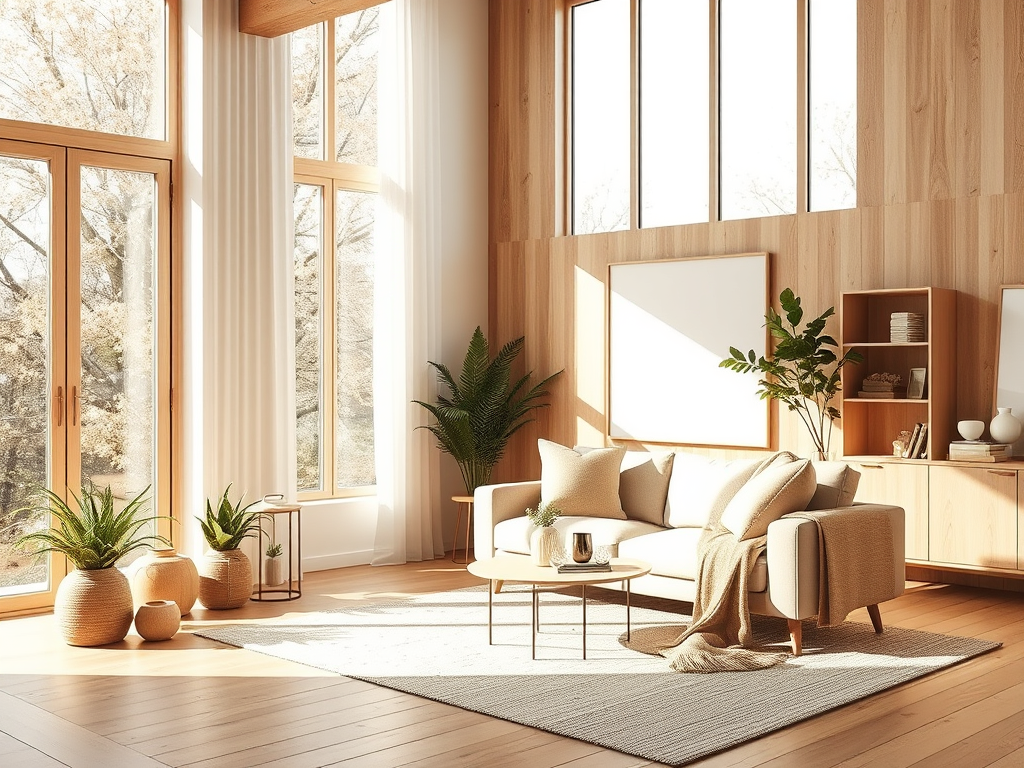


Warm minimalism is an interior design philosophy that reduces visual complexity while deliberately preserving sensory richness — resulting in spaces that feel simultaneously open, calm, and deeply human. Unlike the cold austerity of classical minimalism, warm minimalism layers natural materials, organic forms, and an earthy, muted palette to speak directly to something primal in the human nervous system. It is not about owning less for its own sake. It is about choosing, with genuine intention, what deserves to remain.
We are living through a collective reckoning with overstimulation. Screens, notifications, and cluttered environments have quietly elevated our baseline anxiety — and our homes have come to reflect that chaos. The rising popularity of warm minimalism is not merely a trend cycle. It is a psychological response. Neuroscience, environmental psychology, and decades of biophilic design research all converge on the same conclusion: the spaces we inhabit shape the minds we carry inside them.


In This Article
What Is Warm Minimalism?
To understand warm minimalism, it helps to first understand what it is pushing back against. Traditional minimalism — popularized through architects like Mies van der Rohe in the mid-20th century and later through Japanese wabi-sabi philosophy — embraced reduction as ideology. White walls. Machined edges. The deliberate absence of decoration as the ultimate aesthetic statement. It was radical, intellectual, and often, quietly cold.
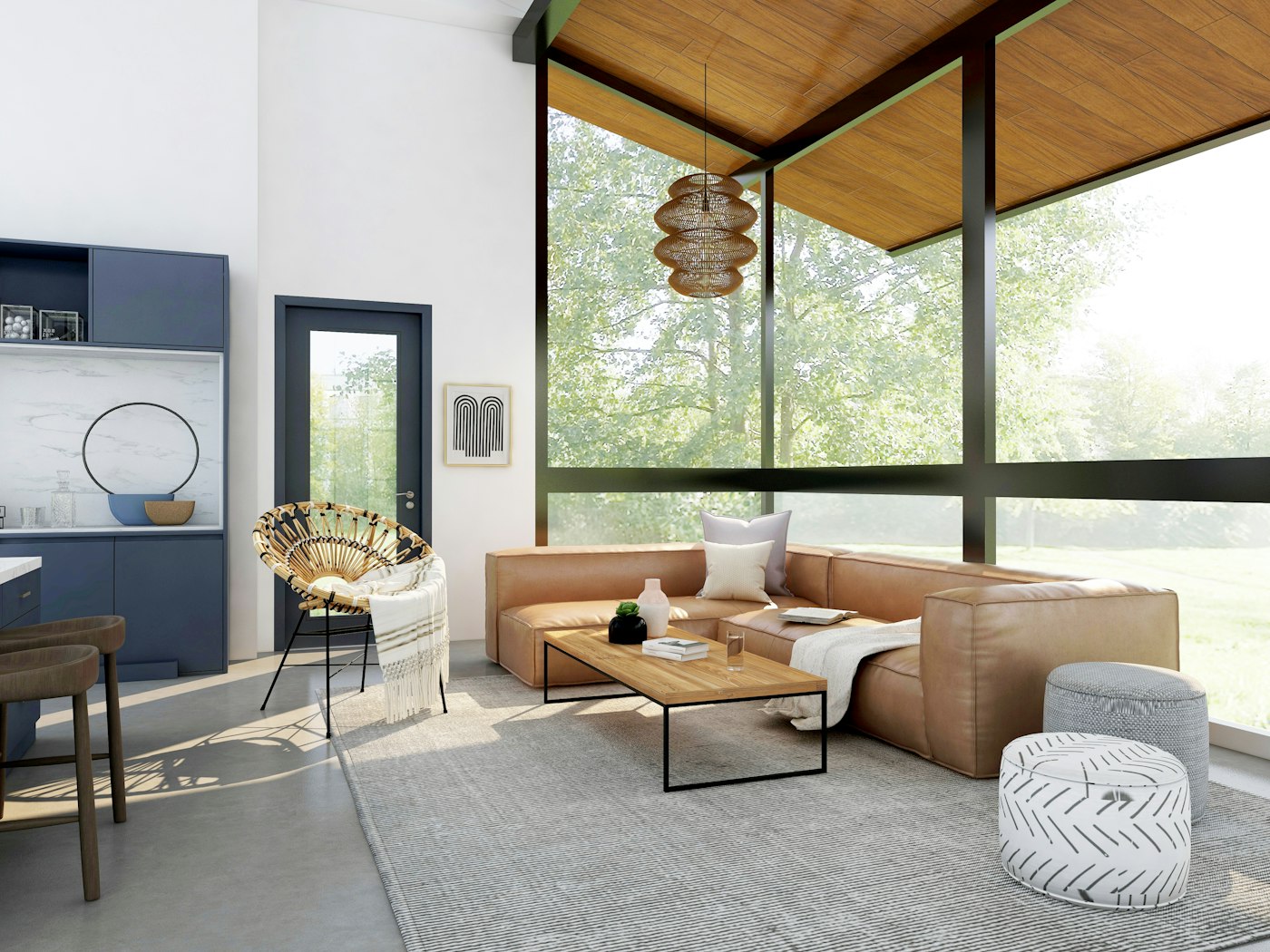
Warm minimalism preserves the discipline of reduction — fewer objects, less visual competition, intentional editing — but introduces warmth as a design counterweight. Warmth here is not merely a color temperature. It is a full-spectrum sensory quality: the rough grain of an oak shelf, the hand-thrown irregularity of a ceramic vessel, the amber pooling of a pendant light over a dining table, the slight imperfection that signals a human hand was involved in making something.
The aesthetic sits comfortably adjacent to Japandi design (the Japanese-Scandinavian hybrid), slow living interiors, and the broader quiet luxury movement — but it is distinct in its conscious psychological intention. Warm minimalism is not just a look. It is a lived argument about how physical environments should support mental well-being.

The Psychology Behind the Aesthetic
The human brain processes its visual environment continuously, even when we are not consciously attending to it. A crowded room demands low-level cognitive labor — the sorting, categorizing, and suppression of irrelevant stimuli — that drains attentional resources over time. This phenomenon, known in environmental psychology as directed attention fatigue, is well-documented in decades of research. Simplified, visually coherent environments reduce this cognitive load and allow what researchers call restorative experiences: states in which the mind can wander, rest, and genuinely recover.
Here is the nuance that distinguishes warm minimalism from its cooler predecessor: visual reduction alone does not automatically produce comfort. Studies in environmental aesthetics consistently find that sterile, featureless environments elevate feelings of anxiety and alienation. We are social, sensory animals. Our nervous systems evolved in richly textured, organically complex natural settings — not white rooms with bare concrete floors.
This is why the specific materials and colors in a warm minimalist space are not arbitrary aesthetic preferences. They are, in a meaningful sense, calibrated to the human nervous system. Linen, wool, clay, stone, and wood trigger cascading associations tied to safety, nourishment, and groundedness — responses embedded in our evolutionary history long before the first built interior existed.
Attention Restoration Theory
First proposed by Rachel and Stephen Kaplan at the University of Michigan in the 1980s, Attention Restoration Theory (ART) offers one of the most robust scientific frameworks for understanding why simplified, nature-connected environments feel psychologically restorative. The Kaplans identified four qualities that characterize genuinely restorative environments: being away (a felt sense of escape from routine cognitive demands), fascination (effortless, low-effort engagement of attention), extent (a sense of being in a coherent, larger world rather than a fragment of one), and compatibility (a felt alignment between the environment and one’s needs and inclinations).
A well-executed warm minimalist space delivers all four. The simplified, decluttered room creates a psychological sense of being away from overstimulation. The organic textures and natural materials engage attention effortlessly — there is always something to notice without anything demanding to be noticed. The coherence of a considered palette and curated objects creates a sense of extent and wholeness. And the warmth of the materials satisfies the deep human preference for inhabited, safe, familiar environments.
Biophilia and the Role of Natural Materials
The concept of biophilia — introduced by evolutionary biologist E.O. Wilson in his 1984 book of the same name — proposes that humans possess an innate affinity for other living systems and the materials produced by the natural world. We did not evolve in built environments. Our nervous systems are calibrated to the sensory signatures of nature: running water, dappled light, organic forms, the texture of bark and stone and earth. When our built environments incorporate these cues, however abstractly, our bodies respond. Cortisol levels drop. Heart rate steadies. We feel, without quite knowing why, that we can breathe.
Warm minimalism is, at its core, a biophilic design language. Every material choice is an invocation of the natural world. Raw linen carries the soft irregularity of woven plant fiber. A travertine surface holds the fossilized record of ancient seabeds. A hand-turned wooden bowl bears the particular curvature that only a lathe and a human hand can produce together. These are sensory anchors that tie a contemporary interior to something far older and more grounding than any designed space.

What Counts as a Natural Material?
In warm minimalism, natural materials are understood generously. The obvious candidates include solid wood (oak, walnut, ash, pine), stone (travertine, limestone, marble, slate), linen and cotton textiles, raw and glazed ceramics, rattan, jute, and sisal. But the category extends further: beeswax candles, dried botanicals, leather, wool, clay plaster walls, and the deliberate, measured exposure of concrete or brick.
The connecting thread is not the material category but its quality of authenticity — materials that reveal their own making, their grain, their imperfection, their variation. Research in tactile cognition suggests we process the perceived authenticity of materials even through vision alone, a phenomenon called haptic simulation. When we look at a rough linen cushion, our brains run a quiet simulation of what touching it would feel like. If that simulation is rich and pleasant, we experience a micro-dose of sensory comfort without touching anything at all.
The Warm Minimalist Color Palette
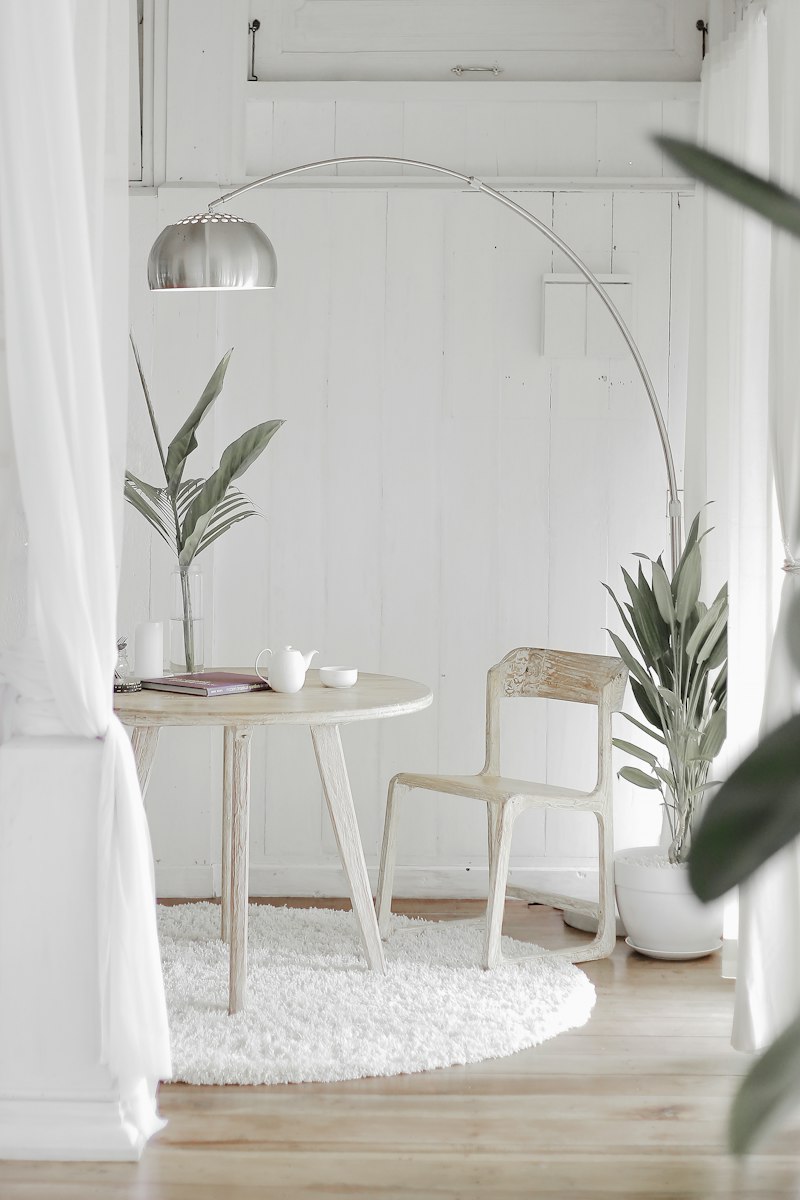
Color is the first language a room speaks. In warm minimalism, the vocabulary is deliberately restrained — but the emotional range it covers is wide. The foundational palette is anchored in warm neutrals: creamy whites, soft stone, sandy beige, greige, and bone. These hues function as visual silence. They do not demand attention but instead allow textures and forms to carry the sensory weight of the room.
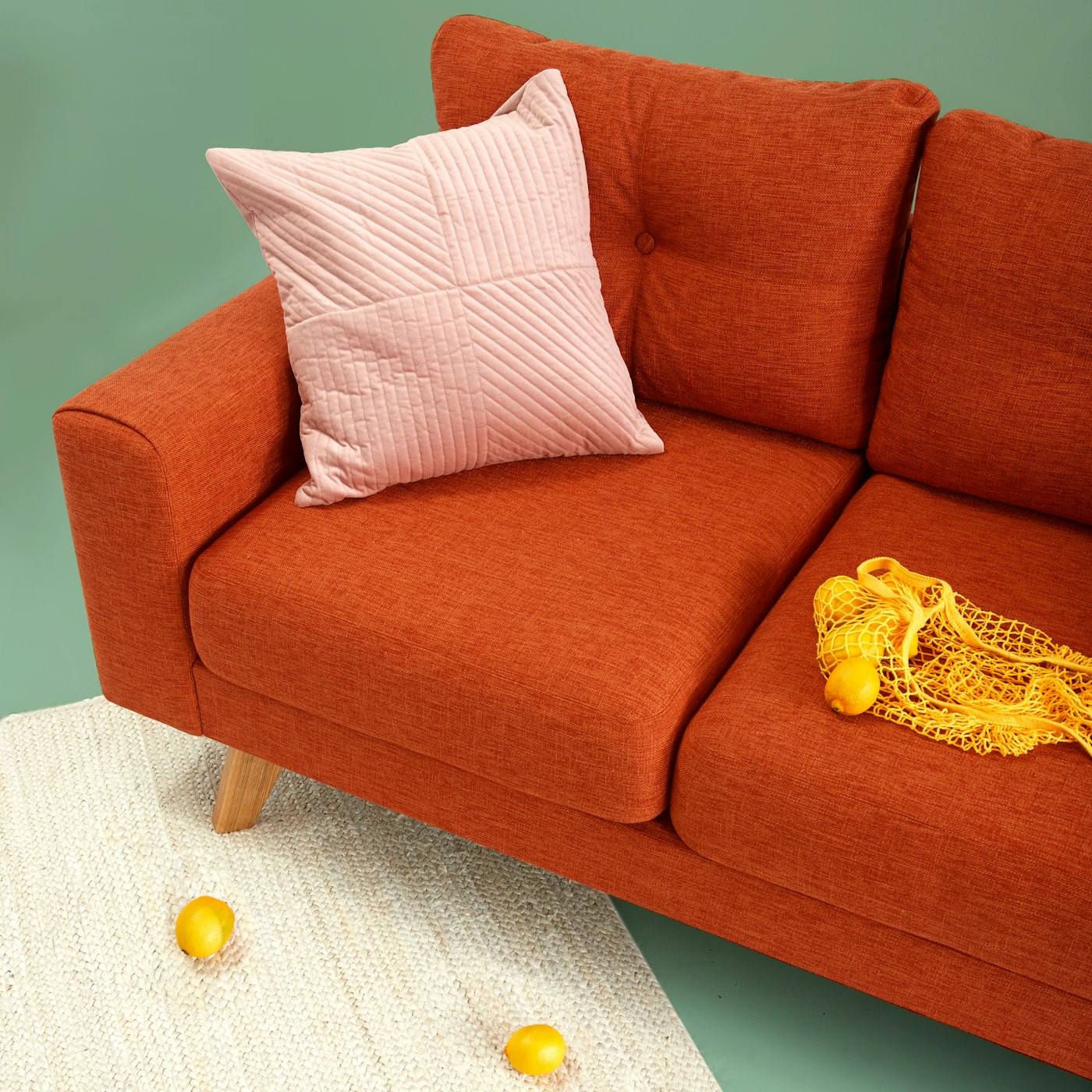
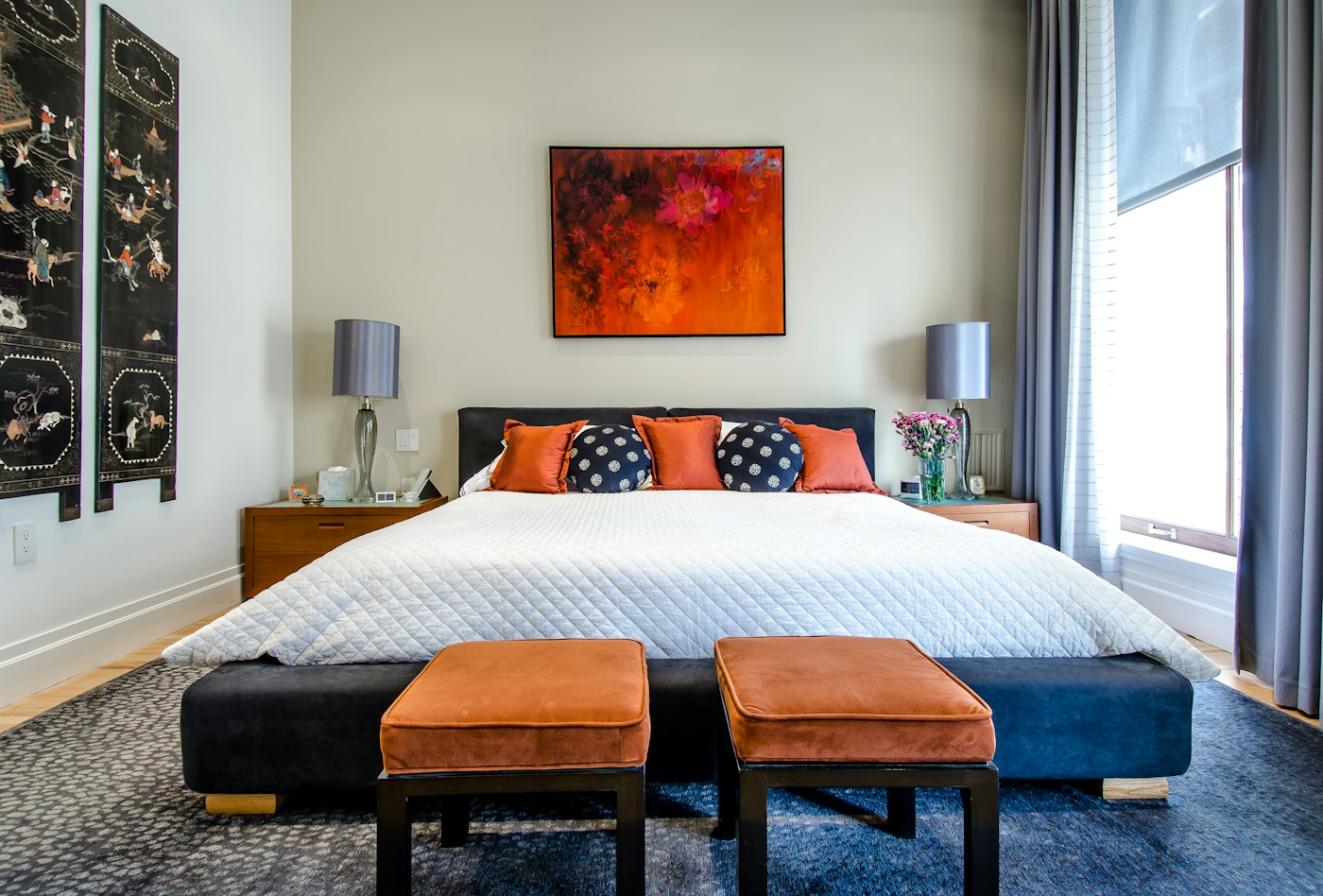
Anchoring these neutrals are earth tones: terracotta, burnt sienna, deep clay, ochre, warm brown, and sage green. These colors carry strong emotional resonance precisely because they echo the palette of the natural world — the soil, the clay riverbank, the sun-dried grass, the faded olive leaf. In the language of color psychology, they are grounding: neither energizing nor depressing, but stabilizing.

Foundation: Warm white, cream, stone, greige, linen
Earth Anchors: Terracotta, ochre, clay, burnt sienna, deep sand
Nature Accents: Sage, dried moss, slate, warm charcoal, dusty olive
What to Avoid: Cool grays, bright whites with blue undertones, high-saturation primary or jewel-toned accents
One of the most common errors when pursuing this aesthetic is defaulting to a cool-toned gray palette on the assumption that it reads as minimalist. Cool gray has its place in Scandinavian and industrial interiors, but it reads as emotionally neutral to cold. Warm minimalism insists, specifically, on warmth. The difference between a wall painted in cool white (with blue undertones) and warm white (with yellow or red undertones) is dramatic in person, even when the two shades look nearly identical on a paint chip held under fluorescent store lighting.
Texture, Form, and the Tactile Brain
If color is the voice of a room, texture is its emotional subtext. In a space with minimal decorative objects, surface texture becomes a primary carrier of sensory information. A smooth, matte plaster wall reads very differently from a polished gypsum one. A nubby boucle armchair invites touch in a way that smooth polyester upholstery does not. These are not trivial distinctions — they shape how long we feel comfortable in a space, how safe we feel, and how much we want to linger.
The neuroscience is compelling. The brain’s somatosensory cortex processes tactile information even when we are only seeing a texture, not touching it. When we look at rough linen, our brains run a quiet simulation of what it would feel like under our fingers. If that simulation is rich and pleasant, the result is a subtle but measurable sense of comfort. Warm minimalism, with its deliberate emphasis on varied organic textures, ensures that every glance around the room delivers continuous, low-level tactile pleasure.
The Case for Organic Forms
Alongside texture, the form of objects carries significant psychological weight. Classical minimalism favored geometric precision: the right angle, the perfect circle, the machined edge. Warm minimalism relaxes this into organic forms — the slight asymmetry of a hand-thrown vessel, the gently curved leg of a solid wood table, the irregular edge of a live-edge shelf, the soft rounded arm of an upholstered chair.
Research in environmental aesthetics consistently finds that curved forms are perceived as more approachable, safer, and more emotionally pleasant than sharp-edged objects — an effect strong enough to measurably influence how long people choose to remain in a room. The organic forms of warm minimalism are not simply softness for its own sake. They are a structural commitment to human comfort, built into every design decision from the macro to the detail level.
Light as Architecture
No single element defines a warm minimalist space more completely than light. Natural light is the gold standard. South- or west-facing rooms that catch afternoon sun have a quality no artificial source can fully replicate. The management of light — both natural and artificial — is one of the most critical and most underestimated disciplines in interior design.
In warm minimalism, light is never harsh. Windows are dressed in sheer linen or left bare to admit diffuse, softened daylight rather than direct glare. Mirrors are deployed strategically — positioned to bounce light into shadowed corners — rather than decoratively. Ceiling fixtures, where used at all, are warm-toned (2700K or below) and dimmer-controlled. The real illuminating work is done by table lamps, floor lamps, and pendant fixtures placed to create pools of amber light that give a room depth, shadow, and intimacy.

The Design Value of Shadow
Shadow in a warm minimalist interior is not a failure of lighting. It is a deliberate design element. A room with only one uniform light level reads as flat and institutional. Strategic shadow — the dim area behind a lamp, the soft gradient from window to wall, the unlit corner beyond a reading chair — creates dimensionality and what the Danish concept of hygge recognizes as the psychological warmth of intimate, enclosed, softly lit space.
Candles, while impractical as a primary light source, are used deliberately in warm minimalist homes precisely because their quality of light — flickering, amber, radiating from a low position — is evolutionarily legible as a signal of shelter, warmth, and safety. No LED bulb, however warm its color temperature, produces the same felt psychological response. In a warm minimalist interior, the candle is not decoration. It is a tool for modulating the emotional register of a room.
How to Apply Warm Minimalism in Your Home
The philosophy is clear. The harder work is the practical translation. Warm minimalism is not achieved by purchasing a coordinated set of objects — it is built through a sustained process of subtraction, curation, and patient layering. Here is how to approach it, decision by decision.
Start with a Ruthless Edit
Before introducing anything new, remove what is competing for attention. This is not about achieving showroom emptiness — it is about honestly identifying which objects in your current space are earning their place. An object earns its place in a warm minimalist interior by being beautiful, useful, or emotionally significant. Ideally all three. Anything that is merely present — accumulated by default, never actively chosen — belongs elsewhere.
A practical method: remove everything from a surface or shelf and only return what you actively choose to return. What you do not replace is an honest answer about what you actually value. This exercise, repeated across a home, has a clarifying and often unexpectedly emotional effect.

Build from the Ground Up
In any room, the foundation consists of floor, wall, and large furniture decisions. These carry the most visual weight and set the emotional key. Warm wood flooring — or a large natural fiber rug in jute, sisal, or wool — grounds the space and establishes the material vocabulary. Wall color in a warm neutral, tested in the actual light conditions of your room at multiple times of day, sets the tonal foundation.
Large upholstered pieces — sofa, armchairs, bed — should be in natural fabrics where possible: linen, boucle, cotton, or wool. Resist the temptation to introduce many accent colors at this stage. The common mistake is over-saturating a space with earth tones until the palette competes with itself. Trust the neutrals. Build depth later, slowly, through textiles, objects, and living plants.
Curate in Layers
Once the foundation is established, a warm minimalist space is built in slow, intentional layers. A ceramic vessel here. A stack of considered books there. A plant that is genuinely thriving. A textile draped across an armchair with casual deliberateness. Each addition should coexist peacefully with what is already present and add to — rather than compete with — the sensory story the room is already telling.
Useful compositional principles: think in odd numbers (three objects on a shelf rather than two or four); vary heights; consider the negative space around each object as carefully as the object itself. An isolated piece speaks clearly; an overcrowded surface speaks incoherently. The goal is a room that reads as curated over time — not collected all at once or purchased as a matching set.
Common Mistakes to Avoid
Mistaking Neutral for Boring
The fear of a flat, featureless room leads many people to over-introduce color accents or decorative objects that compete with the restrained foundation. Warm minimalism achieves its richness through texture and material variation, not color saturation. A matte plaster wall in warm white, a chunky wool throw, a travertine side table, and a single well-thrown ceramic bowl will always out-interest a room crowded with colorful accent pieces — because the interest is tactile and spatial rather than visual and decorative.
Purchasing the Aesthetic Rather Than Curating It
Warm minimalism is currently commercially popular, which means it is possible to purchase a room’s worth of matching “minimalist” objects in an afternoon. The result consistently feels hollow — correct in palette but absent in the authentic, accumulated quality that gives the aesthetic its actual depth. The best warm minimalist spaces are built slowly, mixing new pieces with inherited objects, handmade things, and items found gradually over time. The heterogeneity is the point.
Filling the Negative Space
Empty space in a warm minimalist interior is not waste. It is structure. A cleared surface, an undecorated wall, the breathing room between two objects on a shelf — these are design decisions as considered as anything placed or hung. The urge to fill is powerful and nearly universal. Resisting it, repeatedly and deliberately, is the ongoing practice of this aesthetic.
Neglecting the Upper Volume
Most design attention goes to horizontal surfaces and eye-level planes. Warm minimalism benefits significantly from attention to the upper volume of a room: ceiling color (warm white rather than stark bright white makes a remarkable difference to the felt temperature of a room), the choice of pendant lighting, the height at which curtains are hung (higher and wider than the window opening to suggest greater ceiling height), and the relationship between the room’s vertical and horizontal proportions. These decisions shape felt spaciousness as much as anything on the floor.

Final Thoughts
Warm minimalism is ultimately a design philosophy about choosing presence over accumulation. It asks us to slow down and ask — with genuine curiosity rather than guilt — what a space actually needs. Not what it could accommodate, but what would allow it to be most fully itself. The answer, almost always, involves fewer objects than we think and richer material quality than our default choices tend to reflect.
The psychology beneath this is not complicated, even if the execution requires patience. We are sensory creatures who think more clearly, rest more deeply, and feel more at ease in environments that are visually quiet but materially alive. A warm minimalist home does not ask the mind to perform unnecessary work. It gives the mind — finally and generously — somewhere to rest.
Start small. Clear one surface. Replace one synthetic material with a natural one. Swap one harsh overhead light for a table lamp with a warm shade. The cumulative effect of these decisions, made slowly and repeatedly over months and years of attentive living, is a home that genuinely supports the person inside it. That, more than any specific object or color palette, is what warm minimalism is really about.


Leave a ReplyCancel reply