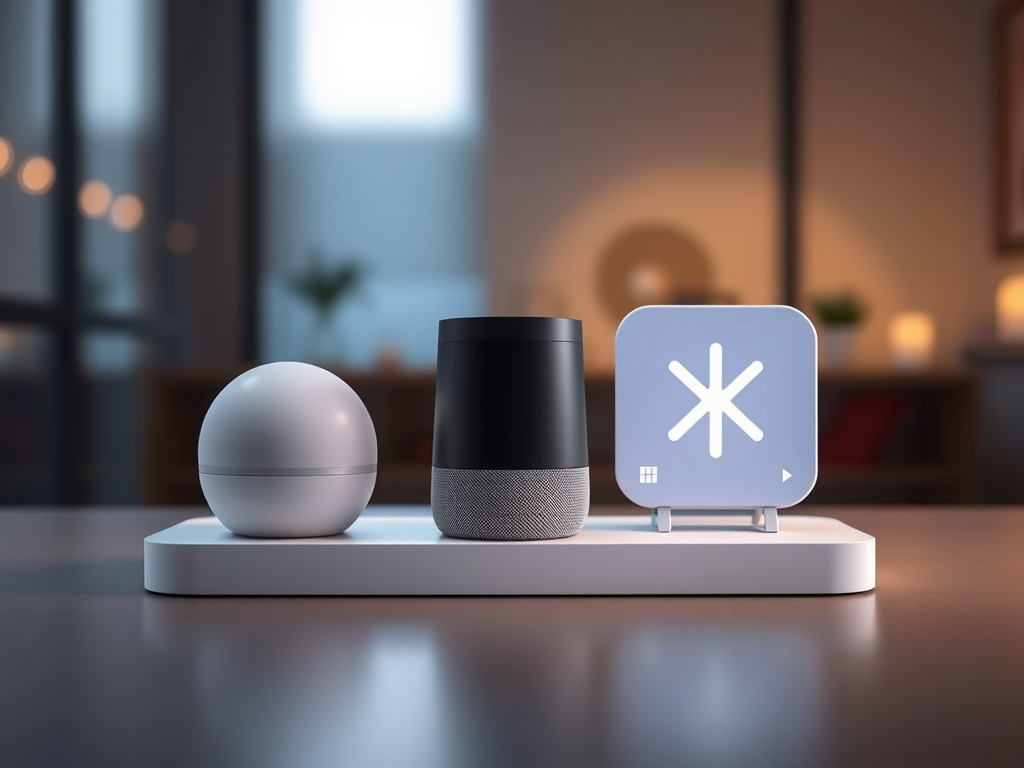

There’s never been a more exciting — or more confusing — time to build a smart home. Walk into any tech retailer or scroll through Amazon and you’ll find hundreds of smart lights, locks, thermostats, cameras, and sensors all promising to make your life easier. But before you drop a single dollar on a device, there’s a foundational question you absolutely must answer first: which ecosystem are you building in?
Choose wrong and you’ll end up with a fragmented collection of apps, voice assistants that don’t talk to each other, and automations that only half-work. Choose right, and your home genuinely starts to feel intelligent — lights that adjust to your mood, doors that unlock when you arrive, and energy usage that optimizes itself without you lifting a finger.
In 2026, the landscape has sharpened into three primary contenders: Matter 2.0, the new universal protocol promising to unite everything; Google Home, the data-driven powerhouse with the most affordable entry points; and Apple HomeKit, the privacy-first premium ecosystem tightly woven into the Apple universe. Each has serious strengths. Each has real limitations. And the right answer depends entirely on how you live.


This guide breaks down everything you need to know — the technology under the hood, device ecosystems, privacy trade-offs, pricing, and real-world performance — so you can make an informed decision before you start building.
Table of Contents
What Is Matter 2.0 and Why Does It Change Everything?
If you’ve followed smart home news over the past few years, you’ve heard the word “Matter” thrown around more times than you can count. But what actually is it, and why is version 2.0 such a significant leap forward?
Matter is an open-source, royalty-free connectivity standard developed by the Connectivity Standards Alliance (CSA) — a consortium that includes Apple, Google, Amazon, Samsung SmartThings, and dozens of other major tech players. The core mission is elegantly simple: make it so any certified Matter device works with any Matter-compatible controller, regardless of brand.
Matter 1.5 vs Matter 2.0
When Matter 1.0 launched in late 2022, the smart home community was cautiously optimistic. The specification worked — but it was limited. It covered lighting, plugs, locks, thermostats, blinds, and a handful of other device categories. Multi-admin (the ability for a device to work with both Google Home and Apple HomeKit simultaneously) was technically possible but often buggy in practice. Thread networking, Matter’s preferred low-power mesh protocol, had limited router support.
Perhaps most frustratingly, the rollout of existing device upgrades through firmware was inconsistent. Brands that promised Matter compatibility for existing products sometimes delivered, sometimes didn’t, and sometimes delivered updates that introduced as many problems as they solved.
What Matter 2.0 Adds
Matter 2.0, finalized and broadly deployed in 2025, addresses the majority of these gaps. The specification now includes support for cameras and video doorbells — one of the most glaring omissions from the original spec. It adds energy management features that allow smart home systems to coordinate with utilities and optimize energy consumption in real time, which is significant both for your electricity bill and for grid-level sustainability goals.
Bluetooth Low Energy (BLE) support for commissioning has been refined, making device setup faster and more reliable. The multi-admin functionality — letting a single device simultaneously live in Google Home, Apple HomeKit, and Amazon Alexa — is now genuinely stable on certified hardware. And Thread router support has expanded dramatically, with most modern smart home hubs and even some Wi-Fi routers now including Thread border router functionality built in.
Matter 2.0 vs Google Home vs Apple HomeKit
That said, Matter 2.0 is a protocol, not an experience. It defines how devices communicate, not how they’re controlled, organized, or automated. The user-facing experience — the apps, automations, voice assistants, and intelligence layered on top — still comes from the ecosystem you choose. Which is precisely why the choice of Google Home vs. Apple HomeKit still matters enormously, even in a Matter-dominated world.

Google Home: The Affordable, AI-Powered Ecosystem
Google Home has undergone a dramatic transformation over the past two years. After a period of feature stagnation and user frustration with the transition away from the original Google Home app, the platform has re-emerged leaner, more powerful, and genuinely competitive at every price tier.
The Hardware Lineup
Google’s own hardware anchors the ecosystem. The Nest Hub (2nd Gen) and Nest Hub Max serve as central controllers with built-in displays, the Nest Audio provides room-filling sound with always-on assistant capability, and the Nest Mini keeps budget-conscious rooms connected for under $50. On the sensing side, the Nest Learning Thermostat remains one of the best smart thermostats ever made — it actually learns your schedule and adjusts without any programming on your part. The Nest Doorbell and Nest Cam lineup covers outdoor and indoor monitoring with Nest Aware cloud storage.
What’s notable is that Google has embraced Matter aggressively. All current Nest devices support Matter, and Google’s Nest Hub Max serves as both a Thread border router and a Matter controller. This means it can serve as the bridge for Thread-based sensors and devices from any brand — including those that work in Apple HomeKit.
Automations and AI Intelligence
Google’s biggest advantage over Apple in the smart home space has always been its AI. The Nest Learning Thermostat is the most famous example, but the broader intelligence extends throughout the ecosystem. Google Home routines can be triggered by sunrise and sunset (adjusted for your actual location), arrival and departure, time of day, or even specific voice commands. The newest Routines use Google’s Gemini AI to understand natural language more fluidly — you can describe an automation in plain English rather than building it step by step in a visual editor.
Presence sensing through the Nest Hub’s radar chip (Soli) allows the display to detect whether someone is in the room and adjust accordingly — dimming when no one is near, brightening and showing relevant information when you walk up. It’s a small feature but one that, once experienced, feels genuinely magical.
The Privacy Trade-Off
There’s no way around it: Google’s business model is built on data. While Google has made significant improvements in transparency about what data is collected and how it’s used — and local processing for many automations has expanded — the fundamental architecture involves more cloud connectivity than Apple’s approach. For many users, this is a perfectly acceptable trade-off for the additional intelligence and the significantly lower device prices. For others, it’s a dealbreaker.
Google Home Pricing Reality
The affordability of the Google Home ecosystem is real and substantial. Nest Mini speakers retail around $50. Third-party Google Home compatible bulbs from brands like TP-Link Tapo or Sengled can run $8–12 per bulb. The Nest Thermostat (not the Learning version) starts at around $130. For renters, budget-conscious first-time smart home builders, or those just starting to experiment, Google Home offers a genuinely compelling entry point.
Apple HomeKit: Privacy, Polish, and Premium Integration
Apple HomeKit has always been the smart home ecosystem for Apple loyalists — but dismissing it as a niche luxury product misses what makes it genuinely superior in several key dimensions, particularly as the Home app and HomeKit architecture have matured.
The Architecture: Local-First Processing
The most important thing to understand about HomeKit is its architecture. Apple processes the overwhelming majority of HomeKit automations locally, on an Apple TV 4K or HomePod (which serves as the home hub). This means your automations run even when your internet is down, they execute faster than cloud-dependent automations, and your device activity data never leaves your home network unless you explicitly use remote access.
This local-first design is not a marketing talking point — it’s a genuine architectural choice that has real, measurable consequences for both speed and privacy. A HomeKit light automation typically executes in under half a second. Cloud-dependent automations in other ecosystems can take 1–3 seconds, which sounds trivial until you’re standing in a doorway waiting for lights that should have already turned on.
The Home App and Interface
Apple’s Home app received a significant architectural rewrite in iOS 16 and has continued to improve. The interface is clean, intuitive, and tightly integrated with iOS, iPadOS, and macOS. Control Center on your iPhone shows your most frequently used accessories. Siri handles voice control. And the Shortcuts app provides an extraordinarily powerful — if occasionally complex — automation engine.
HomePod (2nd Gen) and HomePod mini serve as both home hubs and premium speakers. The audio quality of the full HomePod genuinely competes with dedicated audiophile speakers at twice the price, and Spatial Audio support for Apple Music is a standout feature if you’re invested in that service.
Device Selection and Ecosystem Wall
Historically, HomeKit’s biggest weakness was device selection. Apple’s strict certification requirements meant fewer devices carried the “Works with Apple HomeKit” label, and many were significantly more expensive than their Google Home or Amazon Alexa counterparts. Matter has substantially changed this calculus. With Matter 2.0, any Matter-certified device can be added to HomeKit, which has expanded the compatible device pool dramatically without requiring the full HomeKit certification process.
The remaining limitation is that HomeKit’s richest features — like advanced automations with conditional logic, precise energy monitoring, and some camera features — still require native HomeKit certification rather than Matter passthrough. But for the majority of use cases — lights, locks, thermostats, plugs, sensors — Matter has effectively solved the device availability problem.


Head-to-Head: Ecosystem Comparison Breakdown
Setup and Ease of Use
Both ecosystems have simplified setup dramatically over the past two years. Google Home uses QR code scanning or NFC for most devices. Apple HomeKit uses a HomeKit QR code or NFC chip, and Matter devices scan a QR code. In practice, both take under a minute for individual devices. Google Home has a slight edge for non-technical users simply because Android phones are more prevalent, and the setup experience doesn’t require an Apple ID or any existing Apple hardware.
Voice Assistant Quality
Google Assistant remains the more capable general-knowledge voice assistant, with deeper web integration and better natural language understanding for complex queries. Siri, through HomePod, has improved considerably but remains stronger for device control and Apple ecosystem integration than for open-ended queries. If you want to ask your smart speaker trivia questions, set timers, or get weather forecasts alongside controlling your lights, Google has an edge. If you primarily want to control devices with your voice and stay within the Apple ecosystem, Siri is genuinely excellent.
Privacy and Data
Apple wins unambiguously on privacy. HomeKit’s local processing, Face ID-protected Home app access, and Apple’s stated policy of not using smart home data for advertising represent a fundamentally different approach to user data than Google’s. For households where privacy is a genuine priority — whether due to professional concerns, personal values, or having children in the home — HomeKit’s architecture is meaningfully superior.
Ecosystem Integration
This one depends entirely on what devices you already own. If you have an iPhone, MacBook, Apple Watch, and iPad — HomeKit’s integration is seamless and constantly improving. If you’re on Android, use Google Workspace, own Chromecasts, or are deeply embedded in Google’s services — Google Home is the natural fit. Mixed households (some Android, some iPhone users) actually benefit most from Matter 2.0’s multi-admin capability, which lets a single device live in both ecosystems simultaneously.
Cost
Google Home is meaningfully cheaper at the entry level. A starter kit with a Google Nest Mini, a smart plug, and a smart bulb can be assembled for under $80. An equivalent HomeKit setup with a HomePod mini, a HomeKit plug, and a HomeKit bulb will run $120–150. At scale — building out a whole house — the cost difference can be substantial, though Matter has brought prices down across the board for both ecosystems.
Top Products to Build Your Smart Home

Ecobee Smart Thermostat Premium
The gold standard in Matter-compatible smart thermostats. The Ecobee Premium works natively with Apple HomeKit, Google Home, and Amazon Alexa — and with Matter 2.0, you can run it in all three simultaneously. It includes a built-in air quality sensor, Siri Shortcuts support, and an included SmartSensor for room-level temperature balancing. One of the best investments you can make in home comfort and energy savings.

Eufy Security Indoor Camera — Matter Compatible
Eufy’s Matter-compatible indoor cameras offer 2K resolution, local storage (no subscription required), and end-to-end encryption. They work with both Google Home and Apple HomeKit through Matter, making them one of the most versatile camera options available. The local storage model is a particular win for privacy-conscious HomeKit users who don’t want their footage living in the cloud.

Sonos Era 100 Smart Speaker
Sonos has always been the gold standard for whole-home audio, and the Era 100 continues that tradition. It works with both Apple AirPlay 2 (HomeKit users rejoice) and Google Home, making it one of the truly ecosystem-agnostic premium audio solutions. The Era 100 supports Spotify, Apple Music, Amazon Music, and Tidal natively. If you want premium audio that doesn’t force you to choose an ecosystem, Sonos remains the answer.

Smart Home Starter Bundle — Amazon
Amazon carries the widest selection of Matter 2.0-certified smart home devices at every price point — from budget Thread bulbs to premium smart locks, sensors, and hubs. Whether you’re building in Google Home or Apple HomeKit, Amazon’s marketplace is your best single destination for sourcing compatible devices, comparing specs, and reading real-world reviews from other ecosystem builders.
Which Ecosystem Should You Choose?
After all of this, here’s the honest truth: the right answer is highly personal. But based on the analysis above, here are clear recommendation frameworks for different types of users.
Choose Google Home If…
You use Android as your primary phone. You want the best price-per-device on entry-level hardware. You value Google Assistant’s conversational AI and want your smart home assistant to also be your general-purpose AI assistant. You’re comfortable with Google’s data model and prioritize features over privacy. You’re building a first smart home and want maximum compatibility at minimum cost. Or you live in a household where some members use Android and some use iPhones — Google Home’s cross-platform app experience (including iOS) is genuinely strong.
Choose Apple HomeKit If…
Your household is entirely or predominantly on Apple devices. Privacy is a genuine priority — you want local processing, minimal data collection, and Face ID-protected home control. You want the tightest integration between your iPhone, Apple Watch, Mac, and your home. You’re willing to pay a modest premium for hardware and software quality. You use Apple Music and want HomePod’s Spatial Audio experience. Or you’re building a long-term, high-quality smart home where you’d rather spend more upfront on durable, premium devices than replace cheap ones in two years.
Build With Matter 2.0 Regardless of Which You Choose
Here’s the recommendation that applies universally: whenever you have a choice between a proprietary-only device and a Matter-certified device, choose Matter. This is true whether you’re building in Google Home, HomeKit, or both. Matter devices give you the freedom to switch ecosystems in the future, add a second ecosystem for family members, or simply take advantage of better third-party apps and integrations as they emerge. The smart home landscape will continue to evolve — Matter is your insurance policy against being locked into a dead-end platform.

The Verdict
The smart home ecosystem wars of the 2010s produced a fragmented, frustrating landscape where buying the wrong bulb meant it wouldn’t work with your hub. Matter 2.0 has genuinely changed that story — not by eliminating ecosystems, but by making them interoperable at the device layer. The choice of Google Home vs. Apple HomeKit is now a choice about experience, values, and integration rather than a high-stakes gamble on which devices you’ll be able to use.
Google Home wins on affordability, AI intelligence, and Android integration. Apple HomeKit wins on privacy, local processing speed, and Apple device integration. Both win on device selection, thanks to Matter 2.0. And both lose if you build exclusively with proprietary-only devices that can’t migrate.
The most future-proof strategy: build with Matter 2.0-certified devices wherever possible, anchor your ecosystem choice to the phones and devices your household already uses, and don’t be afraid to run both. The smart home has never been smarter — or more genuinely open — than it is right now. There’s never been a better time to start building.
For more on making the most of your home investment, explore our guides on Real Estate Tech: How Smart Homes Affect Property Value, The Best Home Automation Routines for Energy Savings, and Smart Home Security: Cameras, Locks, and Sensors Ranked.

Leave a Reply