
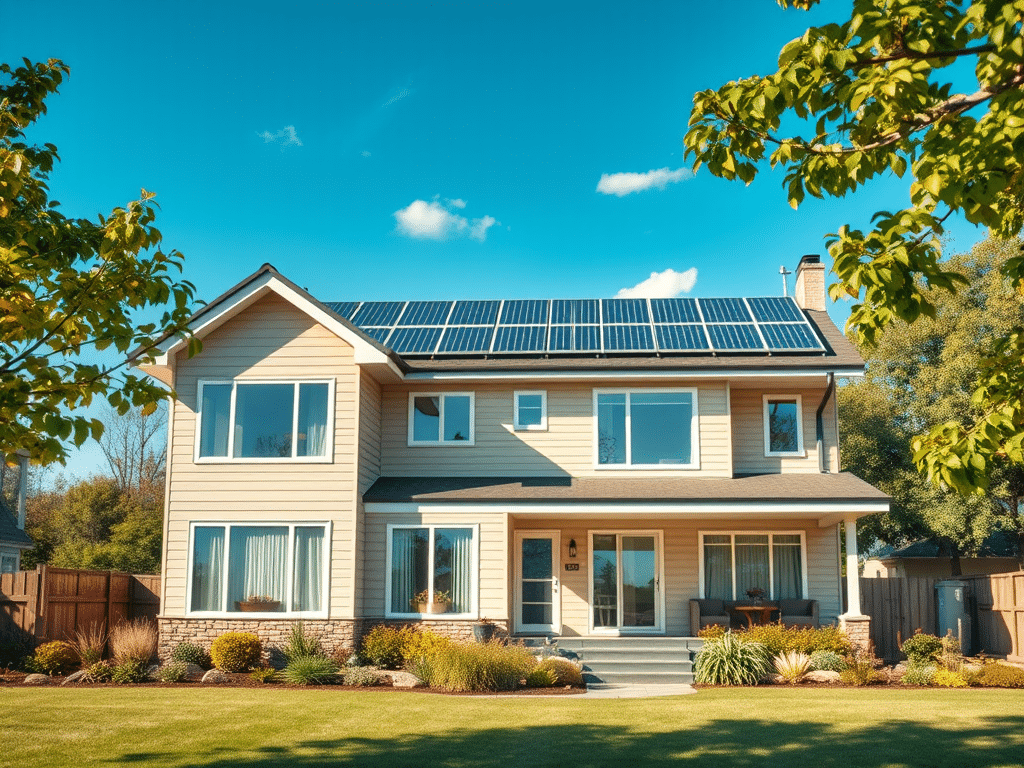


The 1990s were a peculiar time for home building. It was the era of the “McMansion”—homes that prioritized square footage and cathedral ceilings over building science and thermal performance. If you own a home built between 1980 and 2000, you are likely familiar with the symptoms: rooms that are freezing in the winter despite the heat running full blast, energy bills that rival your mortgage payment, and the constant feeling of drafts near windows.
For a long time, the advice for these homes was superficial: “buy better caulk” or “add some fiberglass to the attic.” But as we move toward a net-zero future, a more radical and effective approach has emerged: The Passive House Retrofit, technically known as EnerPHit.
Retrofitting a standard suburban home to Passive House standards is not just a renovation; it is a transformation of the building’s physics. It involves wrapping the home in a continuous thermal blanket, ensuring airtightness that rivals a submarine, and integrating systems that align with the economics of quiet luxury. The result is a home that requires up to 90% less energy for heating and cooling.


The Passive House Envelope: An Outside-In Approach
The core philosophy of a Passive House retrofit is “Envelope First.” Most 1990s homes leak energy like a sieve. They have thermal bridges—structural elements like wood studs or concrete slabs that conduct heat directly from the inside to the outside. In a typical winter, your wall studs are literally piping your expensive heat into the backyard.
To fix this, we don’t just add insulation between the studs; we wrap the entire exterior of the house in rigid insulation. This eliminates thermal bridging and keeps the structural elements of the home warm and dry. Think of it as putting a heavy down jacket on your house, rather than just wearing a thick t-shirt.
However, applying this insulation requires labor-intensive detail work. You aren’t just slapping up boards; you are taping seams, sealing gaps around outlets, and ensuring continuity. For homeowners who aren’t DIY experts, finding skilled labor for these specific, detail-oriented tasks is often the biggest hurdle.


On-Demand Skilled Help
Passive House Windows: The Clear Difference
If the insulation is the jacket, the windows are the zipper. 1990s homes are notorious for aluminum or cheap vinyl single-hung windows. These have R-values (a measure of thermal resistance) hovering around R-1 or R-2. In contrast, a certified Passive House window offers an R-value between R-7 and R-11.
These aren’t just “good windows”; they are distinct pieces of engineering. They typically feature triple-pane glass with two gas fills (argon or krypton), warm-edge spacers, and thermally broken frames. When you sit next to a Passive House window in the middle of a blizzard, you don’t feel a “convective loop” (that sinking feeling of cold air). You feel… nothing. And that is the point. The interior surface of the glass remains within a few degrees of the room temperature.

Achieving Passive House Airtightness
The scariest phrase for many traditional builders is “airtight.” They will tell you, “A house needs to breathe!” This is a myth. A house does not need to breathe through random cracks in the foundation, leaks around the dryer vent, and gaps in the attic hatch. That isn’t breathing; that is uncontrolled leakage that brings in moisture, mold spores, and pollen.
In a Passive House retrofit, we aim for airtightness measured by a Blower Door Test. A typical new code-built home might hit 3.0 ACH50 (Air Changes per Hour at 50 Pascals of pressure). A Passive House targets 0.6 ACH50. We build “airtight” to stop energy loss and moisture damage, but we “ventilate right” using mechanical systems.
The Critical Role of Air Quality
Once you seal a home tight, you must mechanically manage the air quality. This is done via an Energy Recovery Ventilator (ERV). An ERV runs 24/7, pulling stale air from bathrooms and kitchens and replacing it with fresh, filtered outdoor air. It transfers the heat (and humidity) from the outgoing air to the incoming air, retaining the energy you’ve already paid for.
Because the home is so sealed, the internal air quality becomes incredibly pure—provided you manage internal pollutants like cooking fumes, VOCs from furniture, and dust. This creates a perfect environment for smart home technology to monitor and maintain optimal health standards.


Purifier Big+Quiet Formaldehyde
Smart Systems in a Passive House
While the focus is often on heating and cooling, a true zero-energy retrofit looks at every joule of energy consumed. In a super-insulated home, the energy required to heat hot water can actually exceed the energy required to heat the house itself. This flips the script on traditional utility costs.
Upgrading to a Heat Pump Water Heater (HPWH) is standard practice in these retrofits. These units pull heat from the surrounding air to heat water, operating 3-4 times more efficiently than standard electric tanks. But efficiency isn’t just about generation; it’s about control. Leaks and waste in a high-performance home are unacceptable.


Flo Smart Water Monitor & Shutoff
The Economics of a Passive House Retrofit
The elephant in the room is cost. A deep energy retrofit is expensive, often costing 10-15% of the home’s value. However, the return on investment (ROI) must be calculated differently than a kitchen remodel. You aren’t just buying “nicer” things; you are pre-paying your energy bills for the next 30 years. You are also insulating yourself against future energy price volatility.
Furthermore, as we discuss in our guide to Real Estate Investing, high-performance homes are beginning to command a market premium. Appraisers are starting to recognize that a home with $20/month utility bills is significantly more valuable than a neighbor’s home with $400/month bills.


Beyond the money, the biggest ROI is comfort. In a Passive House, there are no cold spots. The temperature is uniform from the floor to the ceiling. The air is fresh and filtered 24/7. It is incredibly quiet because the insulation and windows block out street noise. It turns a “shelter” into a true sanctuary.
Getting Started
Transforming a 1990s build is a journey. It starts with an energy audit and a blower door test to establish your baseline. From there, it requires a team—an architect who understands building physics, a contractor willing to learn new techniques, and a homeowner committed to the process.
Whether you go all the way to certified EnerPHit status or just implement the core principles of airtightness and insulation, you are taking a massive step toward the future of housing. The technology exists today to turn our aging housing stock into the most efficient buildings on earth; it just takes the will to start.


Leave a ReplyCancel reply